Our Rooms
Within The House
Beyond The House
Journal
Offers
Groups
Gift Cards
Good To Know
Get In Touch
Byron Bay’s Surf Lore & Living Heritage


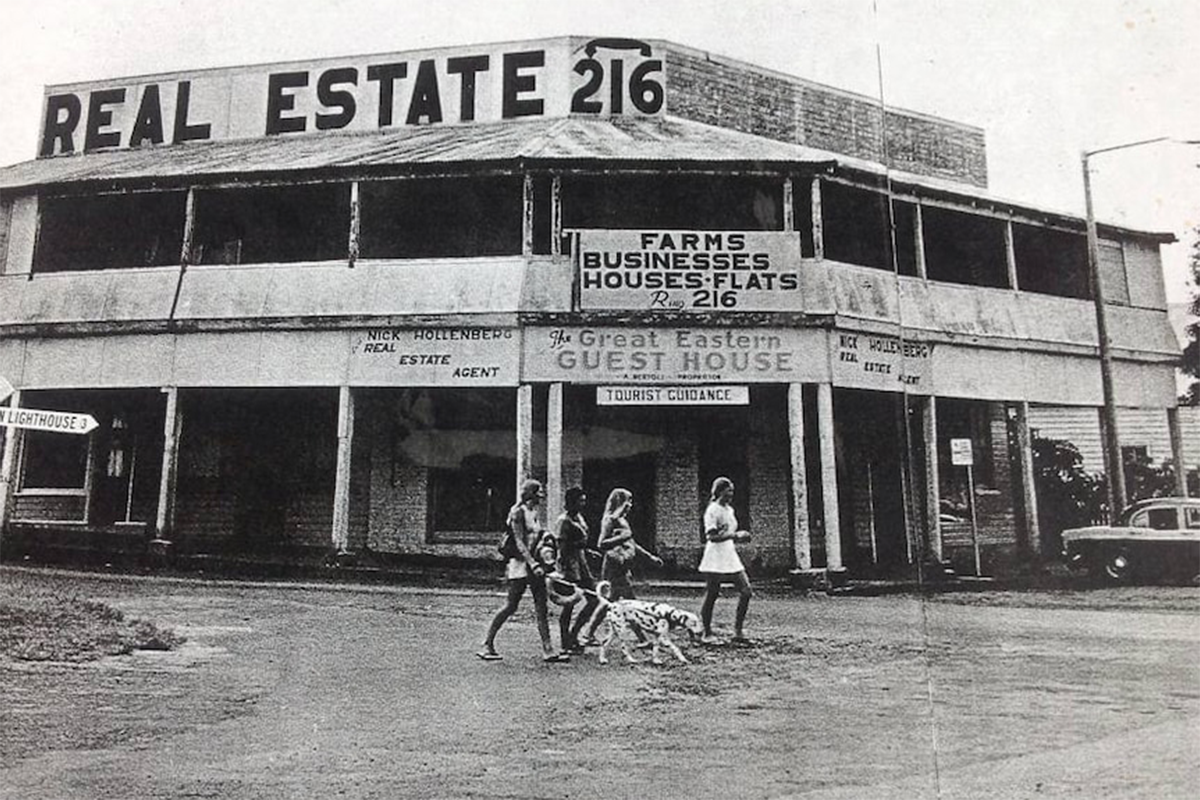
Pictured:
The main street of Byron Bay in the 1970s. (Supplied: Neverland)
“Live in the sunshine, swim the sea, drink the wild air.” — Ralph Waldo Emerson
Picture Byron Bay in the 1960s. The town was shedding its industrial skin as its whaling station closed, sand mining faced mounting opposition, and meatworks operations waned.[1] Stepping onto Fletcher Lane from Basq House today, it feels near mythical to imagine that our quiet Marvell Street hideaway sat moments from an industrial port.
Long before industrial smoke rose over these headlands, this sacred country was always known as Cavvanbah (“meeting place”) by the Arakwal people of the Bundjalung Nation.[2] Shaped over millions of years by volcanic activity, Cape Byron holds a raw, untouched coastline of wrapping point breaks. As the factories fell silent, this unlikely corner of the coast revealed its true character, swiftly transforming into a globally iconic wave-rider’s sanctuary.[3]
Byron’s Surf Revolution
Byron’s rise from a quiet coastal outpost to a global surfing capital began with a few ocean wanderers. In 1961, legendary American filmmaker Bruce Brown arrived at Cape Byron with champion surfer, Phil Edwards, capturing him gliding down crystalline, uncrowded waves for the classic film, Surfing Hollow Days.[4]
When that footage reached screens overseas, it sparked a movement. Surfers seeking a simpler, ocean-centric way of life began making pilgrimages to the north coast, drawn by its warm waters and endless right-hand points.
By the late 1960s, a small group of innovative thinkers (including local shaping legend Bob McTavish, Australian champion Nat Young, and visionary kneeboard designer George Greenough) began experimenting in back-road sheds around town.
Until then, surfing meant riding ten-foot wooden foam “logs” that were difficult to turn. Inspired by Greenough’s flexible, fin-like designs, this group started hacking down heavy boards into nimble, lightweight shortboards under eight feet.[5]
For those looking to delve deeper into our local Byron legends, we recommend reading Tricia Shantz’s, Neverland. There's a copy in the hotel's library. What you’ll discover is just how this small local experiment triggered a worldwide Shortboard Revolution. Back in those days, surfers camped out at Lake Ainsworth or slept in station wagons behind Wategos Beach, capturing raw tube-riding footage for films like Greenough’s 1970 classic The Innermost Limits of Pure Fun.[1]


Legendary Waves & Local History
Breathtaking as our local beaches may be, there are also compelling reasons why each of these beloved breaks have earned their reputation.
The Pass & Clarkes Beach: Celebrated worldwide for its long, peeling right-hand waves, The Pass is where beginners on soft tops share the water with seasoned longboarders. Sand accumulates naturally against the headland rocks, creating a smooth, gentle conveyor belt of water moving surfers down towards Clarkes Beach.[6]
The Wreck (Belongil Beach): Look closely off Belongil Beach at low tide and you might spot a rudder breaking the surface of the water. This is the wreck, SS Wolongbar, a 1921 steamship grounded during a gale.[7] Over the decades, currents have built a sandbar around its submerged hull, turning a historical mishap into an iconic break known for hollow, playful waves.[8]
Wategos & Little Wategos: Tucked directly underneath the Cape Byron Lighthouse, Wategos is a sheltered, crescent-shaped cove protected from harsh southerly winds. Some would say it remains the spiritual home of Byron’s classic longboard culture; a place where locals gather for regular swims, tail-gate coffees, and effortless single-fin sliding.[6]
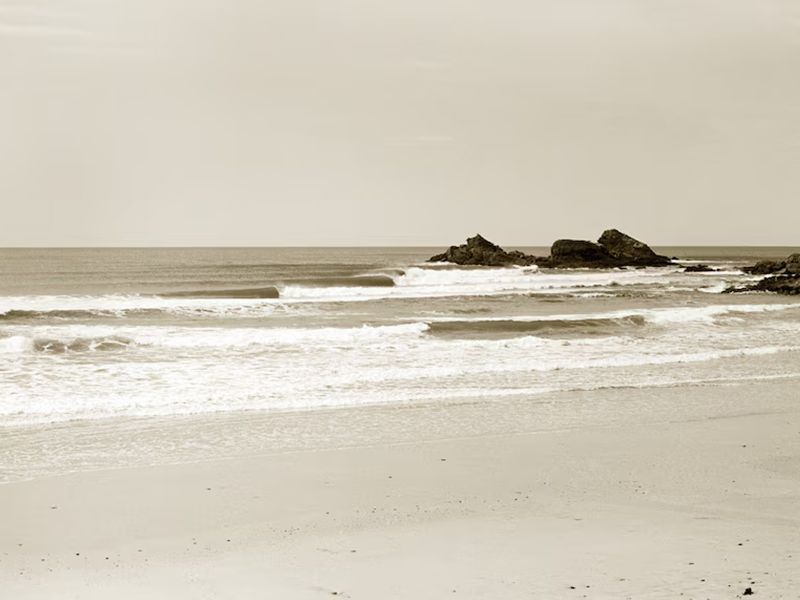
Broken Head & Lennox Point: Just ten-minutes south through coastal rainforest, Broken Head offers steeper, wilder beach breaks surrounded by nature reserves. Further down the coast sits Lennox Point, a nationally recognised Surfing Reserve, famous for its powerful, sweeping swells that draw in world-class talent whenever a southern storm rolls in.[6,9]

Where the Culture Lives On
Byron’s original shaping heritage is still thriving—often hidden in some of Byron’s quiet back roads and industrial estate. And if you know where to look, the threads of Byron’s legendary surf culture are woven throughout the entire region.
The Morning Tradition: Head to Top Shop on Carlyle Street, a restored 1950s corner store perched on the hill where surfers gather after post-dawn sessions for acai bowls, cold brews, and debriefs on the grass.
McTavish Surfboards: Pop into their active factory and café in the Industrial Estate for a morning coffee while watching shapers cut foam behind glass.[10] It’s the ultimate place to ask about wave conditions or order a custom board.
Shaper Showrooms: For custom twin-fins or traditional single-fins, dedicated local workshops like Dead Kooks or Vouch offer a direct connection to modern board design and coastal style.[10]
Surf Cinema at BBFF: Visiting in mid-October? The annual Byron Bay Film Festival regularly screens independent surf documentaries, carrying on the regional storytelling tradition in historic venues across town.

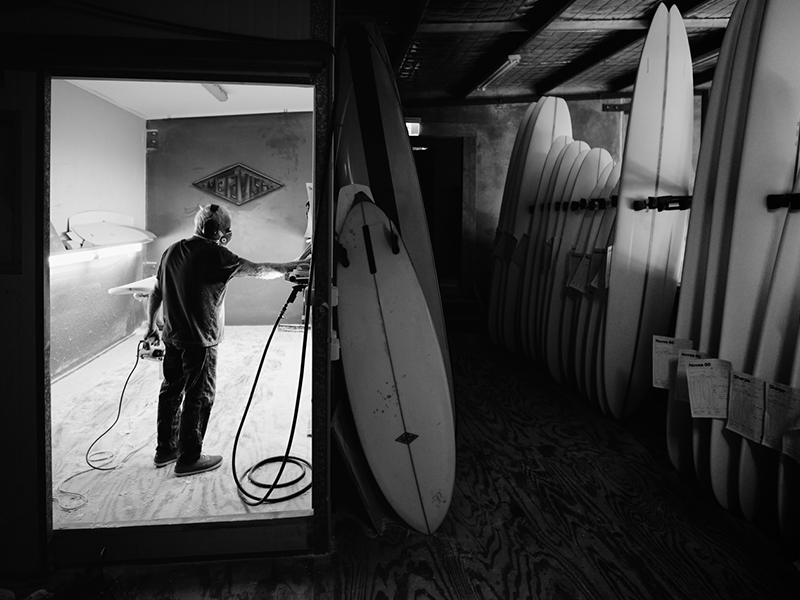
Soak in the Surf Culture with us
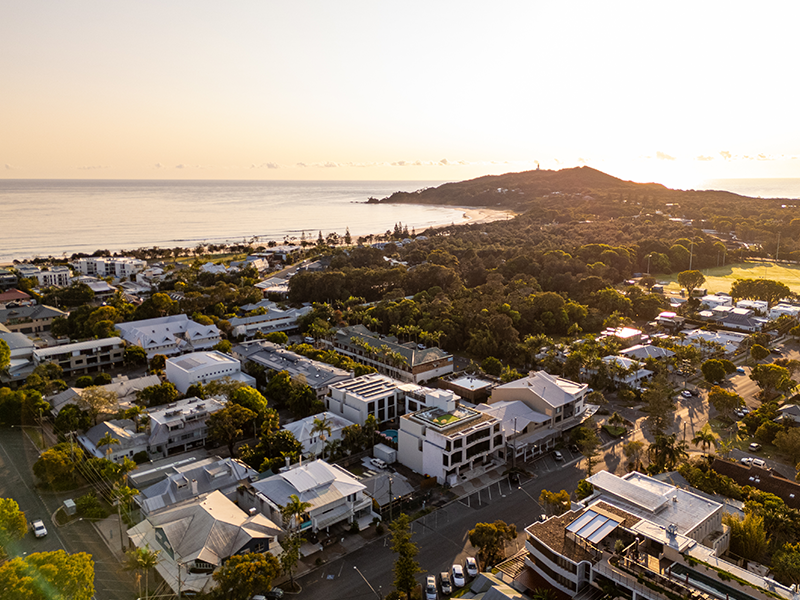
When it’s time to head in from the surf, return back to Basq and rinse off in our heated magnesium pool, lose an hour in the House Library with a design journal, or enjoy a drink on your balcony as the ocean breeze rustles through.
Whether you'd like to borrow one of our House foam boards for a session at Clarkes, want us to book a private lesson with a local instructor, or need advice on where the swell is working best today, come chat with Laurent and our team at reception. We’re always here to help you experience the coast like a local.

[1] ABC News —https://www.abc.net.au/news/2022-08-21/byron-bay-transformation-1970s-now/101343964
[2] Arakwal People of the Bundjalung Nation (Cavvanbah): https://arakwal.com.au/country/
[3] Volcanic Heritage: https://www.visionwalks.com.au/blog/geological-features-of-byron-bay-and-the-great-tweed-volcano-australia-on-the-move
[4] Surfing Hollow Days (1961): https://www.imdb.com/title/tt0298171/
[5] McTavish Surfboards — The Shortboard Revolution: https://www.mctavish.com.au/pages/about-us-mctavish
[6] The Surf Atlas — Byron Bay Surfing Guide: https://thesurfatlas.com/australia-surfing/surfing-in-byron-bay/
[7] SS Wollongbar Shipwreck: https://byronbayhistoricalsociety.org.au/major-events-in-byron-bay/wrecks/
[8] Yeeew! Byron Bay Spot Directory — https://www.yeeew.com/listing/australia/new-south-wales/byron-bay/
[9] National Surfing Reserves — Lennox Point: https://www.surfingreserves.org/lennox/
[10] The Byron Bay Guide — https://thebyronbayguide.com.au/surf-beach-culture/byron-surf-shops-and-local-board-shapers/
Image 1: The main street of Byron Bay in the 1970s. (Supplied: Neverland)
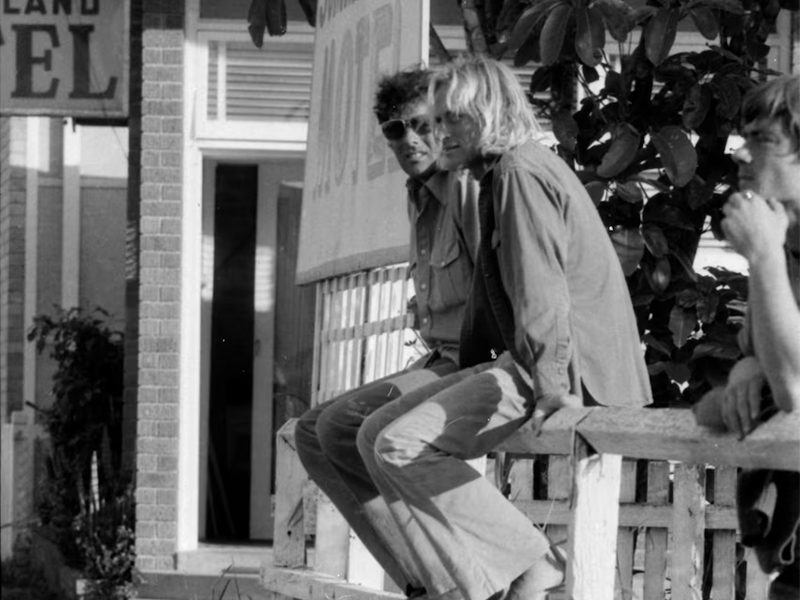
Image 2: Miki Dora and Russell Hughes with Ted Spencer on Jonson Street circa 1971. (Supplied: Rusty Miller)
Image 3: The beach at Broken Head. (Supplied: John Pennings)
Image 4: Bob McTavish shaping a board at McTavish Surfboards, Byron Bay.
Image 5: Basq House, Byron Bay.
More Journals
See All (17)
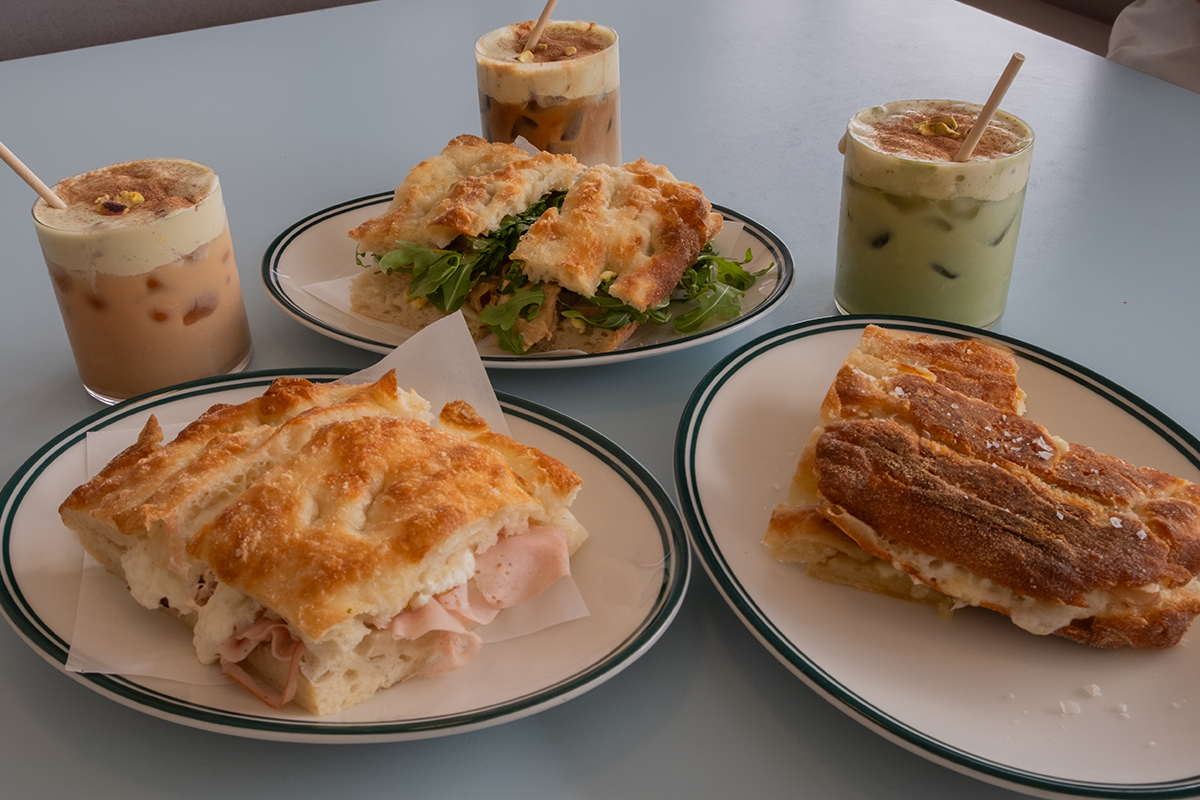
The Northern Rivers Sandwich Search
Lately, the Northern Rivers has seen a shift toward a more elevated deli culture. Sandwiches have become a kind of portable luxury, something to pick up along your way to the beach or to tuck into a picnic basket for a slow drive through the hinterland. We’re talking about considered parcels, stacked with house-fermented pickles, slow-proven focaccia, and regional charcuterie.
From the village lanes of Byron to the heritage storefronts of Ballina, here is where we are currently heading for the perfect stack.
Read More
11 May 2026

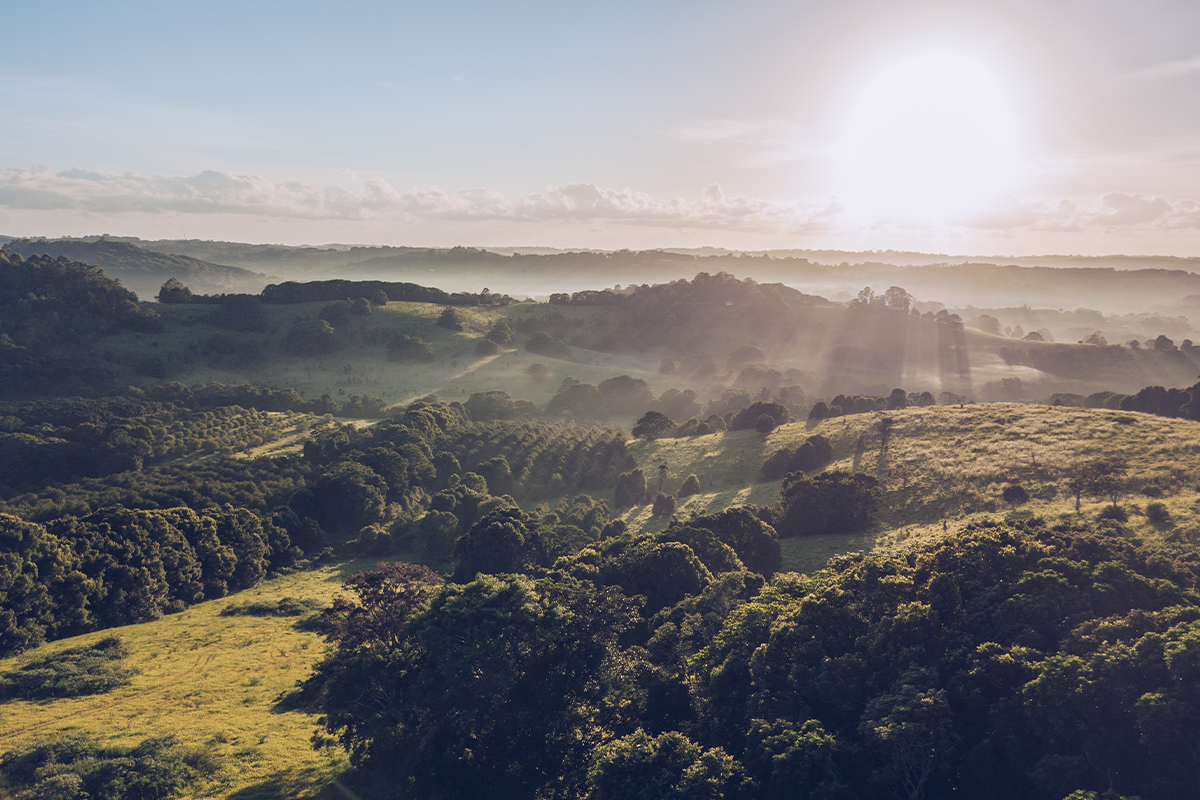
Winter on a Whim
Winter is a season that invites you to wander a little longer and follow a feeling rather than a schedule. Over the next few months, the Northern Rivers settles into a backdrop of crisp, sunny days and cosy nights. From cold-water swims at dawn to afternoons spent unearthing oddities in the unexpected corners of the hinterland, this is the time to pay attention and see where each day takes you.
Read More
04 May 2026

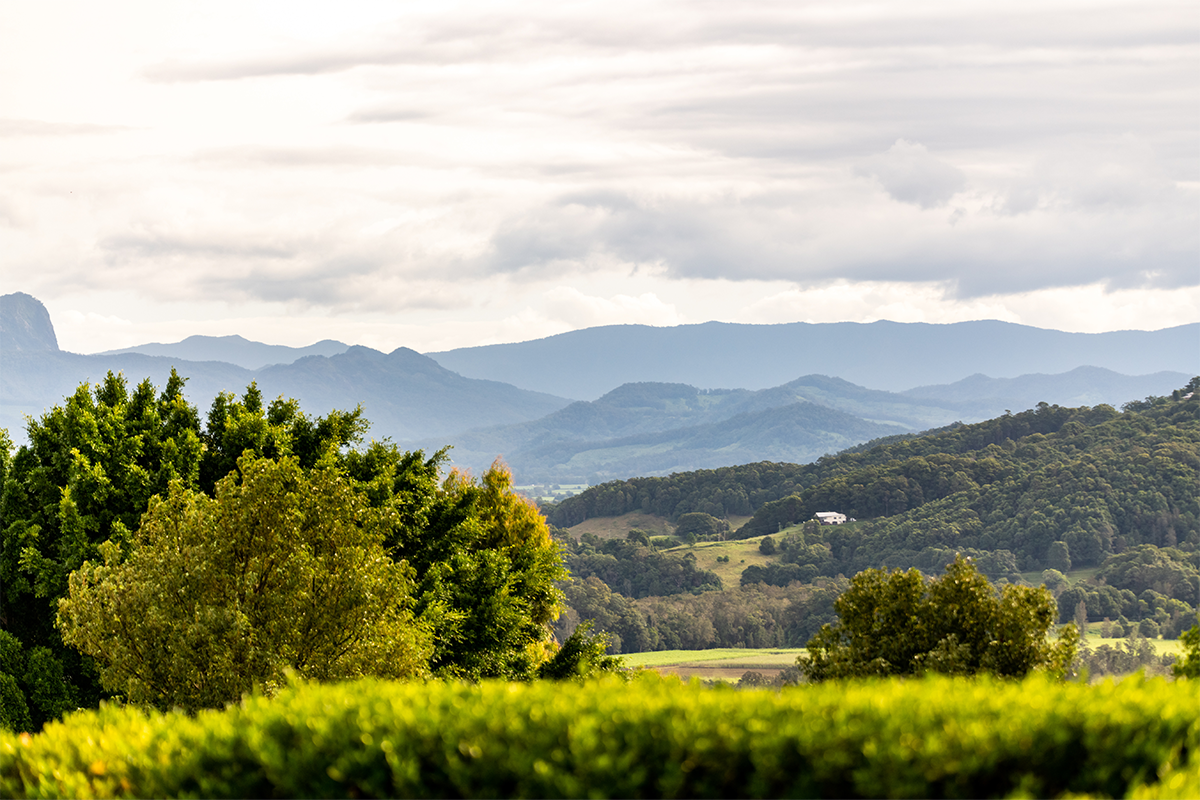
Eat, Hike and Explore in Byron Bay’s Hinterland
For our guests who appreciate the quiet feel of Basq House, the hinterland is an extension of our sanctuary; a region of beautiful farmsteads and hidden natural beauty that somehow feels remarkably undiscovered. Here’s how we recommend discovering the hinterland at your own pace.
Read More
02 Feb 2026